Poetry

The Nuckelavee

As the night grows long

And the Mither needs rest

A beast that stifles all song

Stirs at the devil’s behest

Captive in the darkest waters

Freed with the tempestuous sea

It will feast upon your daughters

On the island with no trees

Upon Orkney’s fields, it lays.

Steady breath, reeking of plague.

In salty waters, watching its prey.

Leaving corpses, bloody and vague.

A festering frame of flayed flesh

And pulsating yellow veins.

Farmers find no seed to thresh.

Its presence withered all the grain.

A torso stitched to horse back.

Knuckles that drag along the grass.

Bodies left uneaten and stacked

To become one rotting writhing mass

A dead stare from the oversized head.

At orphaned children crying in bed.

– R. K. Lightfoot

The Nuckelavee is a poem about a horse-like demon from Orcadian mythology; the nuckelavee. Orkney is an island off the coast of Scotland that has a rich body of fascinating and horrifying folklore, and the nuckelavee is one aspect of that folklore I felt compelled to write a poem about. In Orkney myth, the nuckelavee is imprisoned by the Mither of the Sea during the summer months. But the Mither tires as the year progresses and she eventually weakens enough that the nuckelavee is able to escape. The Mither’s fatigue is said to be why the autumn and winter months have more violent storms. When the Mither regains her strength she imprisons the nuckelavee again, and brings back the calmer seas of spring and summer. The nuckelavee’s horrifying appearance and it’s association with autumn, made it a perfect subject for the autumn/halloween themed poems I’m uploading this October.

© 2022
Photo via Pixabay CC0
Poetry

Fall of the leaf

The red, yellow, brown crisp leaves.

Fall upon my kill, carried by a gentle breeze.

Blood drips down and soaks the soil.

Life springs forth from my murderous toil.

Crows, maggots; all manner of life.

Feed from his corpse, give meaning to his strife.

Fungus grows as he becomes one with the earth.

His death has purpose, his death has worth.

Look upon my work, and all the life it supports.

Life that the coming winter, desires to cut short.

My work must endure, so they may continue to thrive.

Through these deaths, thousands will survive.

– R. K. Lightfoot

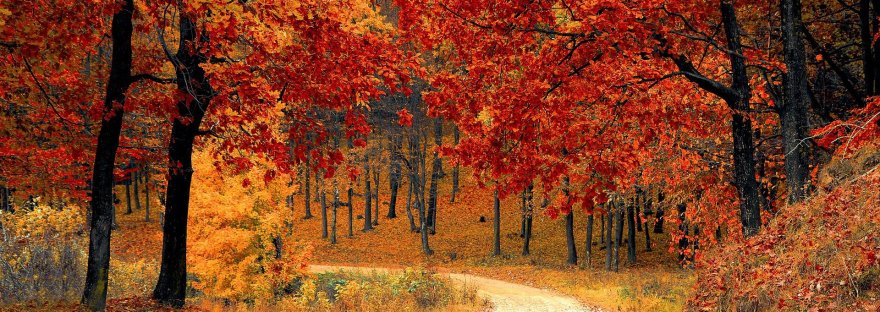
Fall of the leaf is a poem about a serial killer that justifies his murders through the twisted view that by allowing nature to feed upon the corpses he leaves, he is saving more life than he takes. It is autumn time in the poem, and the killer believes that he must continue his work if the wildlife is to survive the approaching winter. The poem and its autumnal setting was inspired by the time of year we are currently in, with this poem being the first of several poems I plan to upload this Halloween season.

© 2022
Photo via Pixabay CC0

Poetry

Painted in his Past

Stripped before the Vor, and sitting in a chair

My life story put before them, laid bare

The Cross on my chest, represents no religious affliction

No, the Thieves’ Cross represents my conviction

The hooded figure, a mark that makes me grin

A cherished reminder that I’ve killed kin

Madonna with child, indicates the cell as my home

Ships with full sails, say I steal when I roam

The white cross on black, is marked on my hand

Time spent in solitary, is denoted by that brand

Medals display my contempt for authority

These painted marks, display my superiority

Without them, I’d be invisible to the Vor

In this life you are your tattoos, and nothing more

Pleased with the story, they mark my shoulders and knees

Now armed with eight-pointed stars, I hold the underworld’s keys

All those that opposed me, now turn heel and run

For these stars denote, that I kneel for no one.

– R. K. Lightfoot

Painted in his Past is a poem all about Russian prison tattoos and the importance of tattoos amongst many criminals in Russia. With a criminals collection of tattoo serving a record of his ‘achievements’ and as an indicator of his status within the criminal community. The idea for this poem came after watching the film Eastern Promises, in which the lead character is stripped before a group of Vor, essentially the Russian Mob equivalent of the Italian Mafia’s made man, and after inspecting his tattoos decide he is worthy of becoming a Vor himself and give eight-pointed star tattoos on his shoulders and knees to denote this.

© 2022
Photo via Pexels CC0

Poetry

San Patricios

A land wrought with famine and strife

I boarded the floating coffin, hopeful for a new life

Landed in America, the officers already waiting

Tales of wages and land, I joined without hesitating

Took up arms to fight for the American dream

But arrived too late for some, and held in low esteem

Me and my countrymen kicked to the dust

Yet expected to fight in their war, it felt unjust

Still we fought, but not for them

We went to search for a new home once again

With their enemies we found shelter and friends

America marched on, no intention to make amends

Side by side, with every battle we’d lose another

But with every loss, those left would become closer than brothers

Alongside our new brethren we fought hard and true

We continued to defend Mexico, from those that let hatred spew

But luck runs out and now many of us are bound by chains

On Mexican soil I am destined to forever remain

I shall never again see my homeland

Close my eyes to picture the Emerald Island

For the momentously moving Mourne mountains, I mourn

To never again walk in the graceful glens, I scorn

As they tighten the rope, I open my eyes

To look upon this new landscape, this different sky

The colourful and vibrant homes of San Ángel, our safe haven

Home to a people who proved themselves no cravens

Under the still unfamiliar, but marvellous Mexican sun

It dawns on me that I’m at peace, and feel no need to run

I accept the rope, and prepare to die

For to die protecting my new home, I take great pride

– R. K. Lightfoot

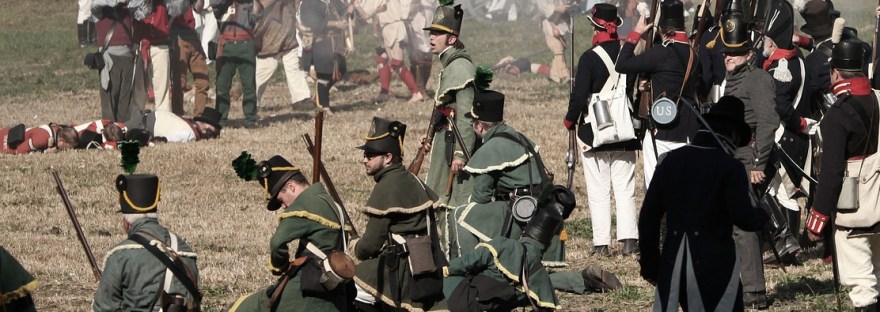
San Patricios is a poem about the Saint Patrick’s Battalion that fought for Mexico in the Mexican-American War (1846 to 1848). The poems name come from the battalion’s Spanish name Batallón de San Patricio, with the battalion often being referred to as the San Patricios. The battalion’s members included many who had deserted or defected from the U.S. Army, and was primarily composed of Irish Catholics, but not exclusively. The poem follows an unnamed Irishman in this battalion, who fled Ireland to escape famine and was immediately signed up to fight for the US in the Mexican-American War. But he soon becomes disenfranchised and joins the Mexican Army’s St. Patrick’s Battalion. He is eventually captured and sentenced to die. But before he is executed, the unnamed soldier comes to realisation that he views Mexico as his new home and the Mexicans he’s fought alongside as his fellow countrymen. Something he’s more than willing to die for.

© 2022
Photo via Pixabay CC0

Poetry

Dearest Oppy

The little rover we sent beyond our reach.

The wonders of Mars you did teach

Turned 90 days, into 15 years of adventure

One storm too many, put an end to that splendour

Your haunting final words left a mark

‘My battery is low and it’s getting dark’

One day, not soon, but one day

We’ll join you up there, I pray

We’ll dust you off, and declare in unity

Thank you dear Oppy. You truly were a once in a lifetime Opportunity

– R.K. Lightfoot

‘Dearest Oppy’ is a poem I wrote years ago to commemorate the Mars rover Opportunity’s last contact with NASA. I recently came across it again while looking through my old work, and was still oddly moved by it. So I thought I might as well let it see the light of day and post it here.

© 2022
Photo via Pixabay CC0