Prose

The Cold Orchard (excerpt)

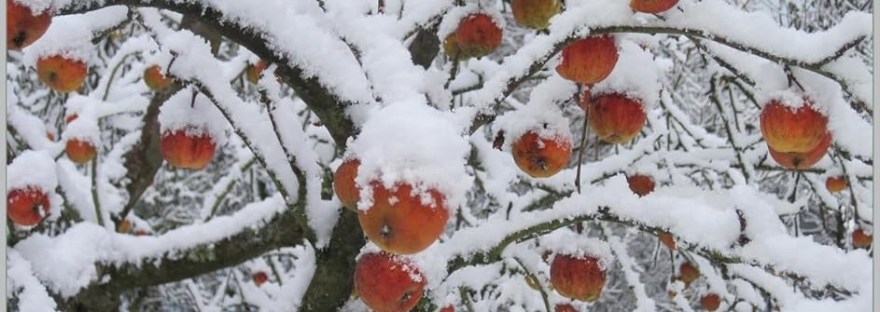
The air was brittle with a cold that threatened to become biting, and endless rows of apple trees cast long shadows under the fading light. Mary Connell looked down at the crumpled brochure in her hands. It seemed that Loughridge Orchard was, at any other time of the year, a shining example of picturesque beauty. She looked back up at the orchard before her, lost in the depths of mid-winter. Loughridge had taken on a dreary face, and the branches of its leafless and fruitless trees clutched at the air like arthritic fingers.

‘Inviting,’ Mary remarked sarcastically.

A hill gently rose from where the driver had dropped her off at the orchard’s edge, scarred by a footpath that led up to the farmhouse. Apple trees towered over the path; their branches curled in such a manner that only the house’s front door remained visible.

‘Jesus wept!’ Mary swore as a chilling breeze whipped her mane of dark brown curls into her face. She readjusted her bobble hat, filled her lungs with cold air, swaddled deeply into her coat, and hauled herself up the path.

From out of the distant farmhouse door, a figure slowly approached. The man was thin and crooked, leaning on his cane. The deep wrinkles of his face stretched out from a pair of eyes as pale and sharp as hoarfrost. This, she knew, must be the orchard’s owner, Sammy Loughridge.

He paused on his descent, choosing to wait for Mary beneath an abnormally large and crooked apple tree. Even in winter, the great tree stood heavy with fruit, broad branches bending under the weight of its bounty. Each gnarled apple’s skin was a patchwork of dull reds streaked with burnished golds and russet browns, as though autumn itself had painted them with its dying breath. Sammy readjusted his flat cap, thin tufts of white hair poking out, then firmly patted the crooked tree’s trunk.

The hairs along Mary’s arms stood on end as she felt his sharp eyes watch her approach.

‘Welcome to Loughridge Orchard,’ he said with a voice like rough whiskey. ‘Hand that over here. I’ll take your suitcase the rest of the way.’

‘Thank you,’ Mary replied. ‘But I’d prefer to bring it up myself, if it’s all the same.’

The old man swiftly redirected his helping hand to brush against her arm. ‘To the house then.’ He smiled and gave a gentle push to guide her ahead of him.

As they reached the end of the rows, the farmhouse came fully into view, no longer hidden by the grasping branches. It was a big house. Ancient grey stone rose from the earth and shaped itself into something that might have once been a church, long estranged from its grace by a change in tenants and thoughtless renovations. The windows seemed to watch Mary with sorrow and regret, as if aware of their own desecration. And just beyond the house, she could see faint light glinting off a large pond…

Interested in reading more? You can find the rest of ‘The Cold Orchard’ on Amazon! Only £0.99 to buy, or free on Kindle Unlimited!

Another short story and another excerpt! Years ago, I published a poem on this blog, ‘Cider Country’. It has always been one of my favourite poems that I’ve posted here, and after recently rereading the poem, I decided to revisit the premise and turn it into a short story. And so ‘Cider Country’ became ‘The Cold Orchard’. Writing it took me a little longer than I would’ve liked, but I’m happy with the finished product, and I hope you all enjoy reading it! – R.K. Lightfoot

At a quiet winter retreat, Mary wishes to do nothing more than write her novel and eat the meals her elderly host cooks for her. But as she comes to learn, the Loughridge Orchard holds more within its boughs than meets the eye. Winter’s cold bite reveals all in this ~6,400-word modern gothic short story that slowly unfolds its tale of guilt, retribution, and the cruel persistence of memory.

Poetry

The Nuckelavee

As the night grows long

And the Mither needs rest

A beast that stifles all song

Stirs at the devil’s behest

Captive in the darkest waters

Freed with the tempestuous sea

It will feast upon your daughters

On the island with no trees

Upon Orkney’s fields, it lays.

Steady breath, reeking of plague.

In salty waters, watching its prey.

Leaving corpses, bloody and vague.

A festering frame of flayed flesh

And pulsating yellow veins.

Farmers find no seed to thresh.

Its presence withered all the grain.

A torso stitched to horse back.

Knuckles that drag along the grass.

Bodies left uneaten and stacked

To become one rotting writhing mass

A dead stare from the oversized head.

At orphaned children crying in bed.

– R. K. Lightfoot

The Nuckelavee is a poem about a horse-like demon from Orcadian mythology; the nuckelavee. Orkney is an island off the coast of Scotland that has a rich body of fascinating and horrifying folklore, and the nuckelavee is one aspect of that folklore I felt compelled to write a poem about. In Orkney myth, the nuckelavee is imprisoned by the Mither of the Sea during the summer months. But the Mither tires as the year progresses and she eventually weakens enough that the nuckelavee is able to escape. The Mither’s fatigue is said to be why the autumn and winter months have more violent storms. When the Mither regains her strength she imprisons the nuckelavee again, and brings back the calmer seas of spring and summer. The nuckelavee’s horrifying appearance and it’s association with autumn, made it a perfect subject for the autumn/halloween themed poems I’m uploading this October.

© 2022
Photo via Pixabay CC0

Poetry

Fall of the leaf

The red, yellow, brown crisp leaves.

Fall upon my kill, carried by a gentle breeze.

Blood drips down and soaks the soil.

Life springs forth from my murderous toil.

Crows, maggots; all manner of life.

Feed from his corpse, give meaning to his strife.

Fungus grows as he becomes one with the earth.

His death has purpose, his death has worth.

Look upon my work, and all the life it supports.

Life that the coming winter, desires to cut short.

My work must endure, so they may continue to thrive.

Through these deaths, thousands will survive.

– R. K. Lightfoot

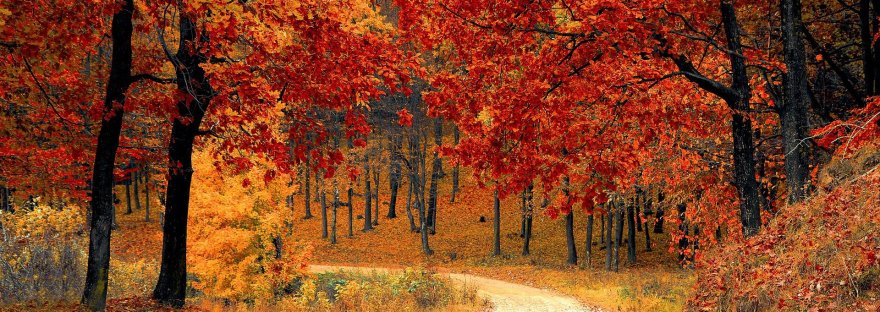
Fall of the leaf is a poem about a serial killer that justifies his murders through the twisted view that by allowing nature to feed upon the corpses he leaves, he is saving more life than he takes. It is autumn time in the poem, and the killer believes that he must continue his work if the wildlife is to survive the approaching winter. The poem and its autumnal setting was inspired by the time of year we are currently in, with this poem being the first of several poems I plan to upload this Halloween season.

© 2022
Photo via Pixabay CC0

Poetry

Painted in his Past

Stripped before the Vor, and sitting in a chair

My life story put before them, laid bare

The Cross on my chest, represents no religious affliction

No, the Thieves’ Cross represents my conviction

The hooded figure, a mark that makes me grin

A cherished reminder that I’ve killed kin

Madonna with child, indicates the cell as my home

Ships with full sails, say I steal when I roam

The white cross on black, is marked on my hand

Time spent in solitary, is denoted by that brand

Medals display my contempt for authority

These painted marks, display my superiority

Without them, I’d be invisible to the Vor

In this life you are your tattoos, and nothing more

Pleased with the story, they mark my shoulders and knees

Now armed with eight-pointed stars, I hold the underworld’s keys

All those that opposed me, now turn heel and run

For these stars denote, that I kneel for no one.

– R. K. Lightfoot

Painted in his Past is a poem all about Russian prison tattoos and the importance of tattoos amongst many criminals in Russia. With a criminals collection of tattoo serving a record of his ‘achievements’ and as an indicator of his status within the criminal community. The idea for this poem came after watching the film Eastern Promises, in which the lead character is stripped before a group of Vor, essentially the Russian Mob equivalent of the Italian Mafia’s made man, and after inspecting his tattoos decide he is worthy of becoming a Vor himself and give eight-pointed star tattoos on his shoulders and knees to denote this.

© 2022
Photo via Pexels CC0

Poetry

San Patricios

A land wrought with famine and strife

I boarded the floating coffin, hopeful for a new life

Landed in America, the officers already waiting

Tales of wages and land, I joined without hesitating

Took up arms to fight for the American dream

But arrived too late for some, and held in low esteem

Me and my countrymen kicked to the dust

Yet expected to fight in their war, it felt unjust

Still we fought, but not for them

We went to search for a new home once again

With their enemies we found shelter and friends

America marched on, no intention to make amends

Side by side, with every battle we’d lose another

But with every loss, those left would become closer than brothers

Alongside our new brethren we fought hard and true

We continued to defend Mexico, from those that let hatred spew

But luck runs out and now many of us are bound by chains

On Mexican soil I am destined to forever remain

I shall never again see my homeland

Close my eyes to picture the Emerald Island

For the momentously moving Mourne mountains, I mourn

To never again walk in the graceful glens, I scorn

As they tighten the rope, I open my eyes

To look upon this new landscape, this different sky

The colourful and vibrant homes of San Ángel, our safe haven

Home to a people who proved themselves no cravens

Under the still unfamiliar, but marvellous Mexican sun

It dawns on me that I’m at peace, and feel no need to run

I accept the rope, and prepare to die

For to die protecting my new home, I take great pride

– R. K. Lightfoot

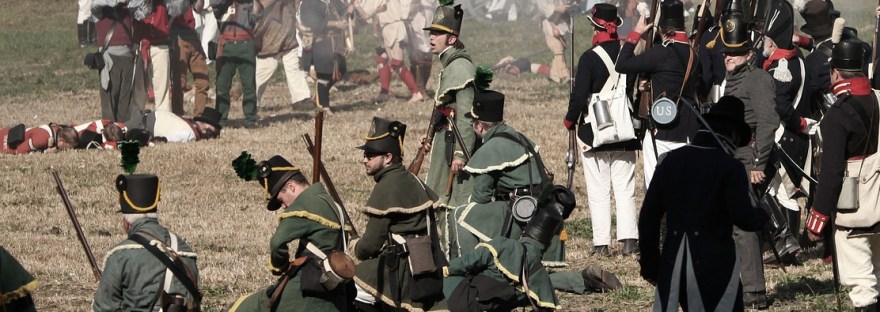
San Patricios is a poem about the Saint Patrick’s Battalion that fought for Mexico in the Mexican-American War (1846 to 1848). The poems name come from the battalion’s Spanish name Batallón de San Patricio, with the battalion often being referred to as the San Patricios. The battalion’s members included many who had deserted or defected from the U.S. Army, and was primarily composed of Irish Catholics, but not exclusively. The poem follows an unnamed Irishman in this battalion, who fled Ireland to escape famine and was immediately signed up to fight for the US in the Mexican-American War. But he soon becomes disenfranchised and joins the Mexican Army’s St. Patrick’s Battalion. He is eventually captured and sentenced to die. But before he is executed, the unnamed soldier comes to realisation that he views Mexico as his new home and the Mexicans he’s fought alongside as his fellow countrymen. Something he’s more than willing to die for.

© 2022
Photo via Pixabay CC0