
Prose

The Cold Orchard (excerpt)

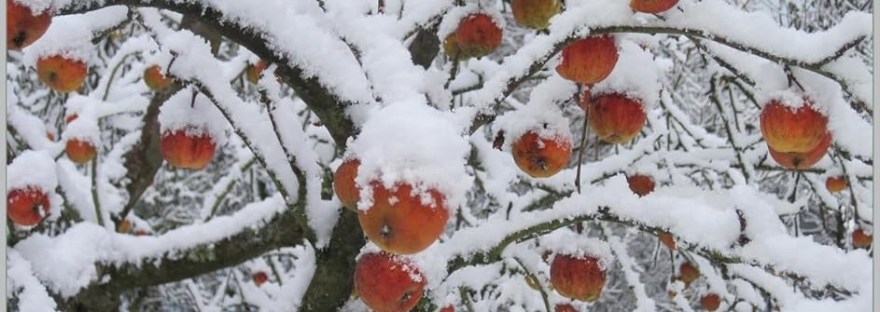
The air was brittle with a cold that threatened to become biting, and endless rows of apple trees cast long shadows under the fading light. Mary Connell looked down at the crumpled brochure in her hands. It seemed that Loughridge Orchard was, at any other time of the year, a shining example of picturesque beauty. She looked back up at the orchard before her, lost in the depths of mid-winter. Loughridge had taken on a dreary face, and the branches of its leafless and fruitless trees clutched at the air like arthritic fingers.

‘Inviting,’ Mary remarked sarcastically.

A hill gently rose from where the driver had dropped her off at the orchard’s edge, scarred by a footpath that led up to the farmhouse. Apple trees towered over the path; their branches curled in such a manner that only the house’s front door remained visible.

‘Jesus wept!’ Mary swore as a chilling breeze whipped her mane of dark brown curls into her face. She readjusted her bobble hat, filled her lungs with cold air, swaddled deeply into her coat, and hauled herself up the path.

From out of the distant farmhouse door, a figure slowly approached. The man was thin and crooked, leaning on his cane. The deep wrinkles of his face stretched out from a pair of eyes as pale and sharp as hoarfrost. This, she knew, must be the orchard’s owner, Sammy Loughridge.

He paused on his descent, choosing to wait for Mary beneath an abnormally large and crooked apple tree. Even in winter, the great tree stood heavy with fruit, broad branches bending under the weight of its bounty. Each gnarled apple’s skin was a patchwork of dull reds streaked with burnished golds and russet browns, as though autumn itself had painted them with its dying breath. Sammy readjusted his flat cap, thin tufts of white hair poking out, then firmly patted the crooked tree’s trunk.

The hairs along Mary’s arms stood on end as she felt his sharp eyes watch her approach.

‘Welcome to Loughridge Orchard,’ he said with a voice like rough whiskey. ‘Hand that over here. I’ll take your suitcase the rest of the way.’

‘Thank you,’ Mary replied. ‘But I’d prefer to bring it up myself, if it’s all the same.’

The old man swiftly redirected his helping hand to brush against her arm. ‘To the house then.’ He smiled and gave a gentle push to guide her ahead of him.

As they reached the end of the rows, the farmhouse came fully into view, no longer hidden by the grasping branches. It was a big house. Ancient grey stone rose from the earth and shaped itself into something that might have once been a church, long estranged from its grace by a change in tenants and thoughtless renovations. The windows seemed to watch Mary with sorrow and regret, as if aware of their own desecration. And just beyond the house, she could see faint light glinting off a large pond…

Interested in reading more? You can find the rest of ‘The Cold Orchard’ on Amazon! Only £0.99 to buy, or free on Kindle Unlimited!

Another short story and another excerpt! Years ago, I published a poem on this blog, ‘Cider Country’. It has always been one of my favourite poems that I’ve posted here, and after recently rereading the poem, I decided to revisit the premise and turn it into a short story. And so ‘Cider Country’ became ‘The Cold Orchard’. Writing it took me a little longer than I would’ve liked, but I’m happy with the finished product, and I hope you all enjoy reading it! – R.K. Lightfoot

At a quiet winter retreat, Mary wishes to do nothing more than write her novel and eat the meals her elderly host cooks for her. But as she comes to learn, the Loughridge Orchard holds more within its boughs than meets the eye. Winter’s cold bite reveals all in this ~6,400-word modern gothic short story that slowly unfolds its tale of guilt, retribution, and the cruel persistence of memory.
Prose

Toadstone (excerpt)

In the shadowed dining hall of Morrig Manor, the air was thick with a damp and sour stench that clung to the throat. Marc stood with his posture firm and hands folded neatly behind him. In servile silence, his eyes traced the moth-ravaged tapestries of forgotten wars, their heroic figures fading into obscurity beneath mildew’s slow encroachment, as rusted sconces cast dancing phantoms across the long dining table like a mummer’s shadow play. Lord Morrig sat hunched over the table, goblet in one hand and crumpled letter in the other, as he too fixed his silent gaze on the once proud tapestries. Upon the old Lord’s shoulder perched his prized pet, Crimson. Named for its bulbous, blood-red eyes, the corpulent fly had long since swollen beyond nature’s mercy, its thorny bristles fraying Lord Morrig’s robes and twitching faintly as it dreamed. The silence between them was cleaved clean by a howling wind, which carried with it the keening knell of the cathedral’s bells.

As if awoken by the toll, Lord Morrig suddenly straightened his back, a movement which sent Crimson into a pained and droning flight. “They slight me again, Marc!” he spat. “The Bishop dares write to me that he will not christen my blood! Instead, he writes that the heir to House Morrig is to be christened by some fresh from the seminary altar boy, still wet from his own baptism! And why? Because of this plague, this tempest in a teacup that does nothing more than scour hovels of their hermits! As though pestilence would dare lay its hands on my blood!” He slammed the goblet down, the dregs splashing like spilt blood…

Interested in reading more? You can find the rest of ‘Toadstone’ on Amazon! Only £0.99 to buy, or free on Kindle Unlimited!

I’ve regretfully allowed this blog to fall to the wayside once again. But as you can see, I’ve been busy! I am thrilled to have finally self-published ‘Toadstone’ and make it available for people to read. And hopefully it is just the first of many more short stories to come! – R.K. Lightfoot

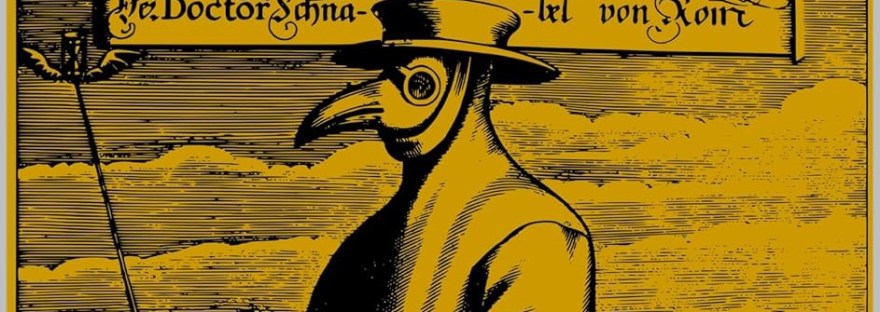
In the shadow of the plague-stricken city of Beelswick, despair festers as fast as the disease itself. But whispers of a monstrous toad dwelling deep within the dark woods, and the curative wonders of the toadstone within its head, give some desperate folk a hope to cling to. This dark fantasy short story blends grim medieval atmosphere and plague town horror into a tale of blood and superstition. At around 3,900+ words, it delivers a concentrated, and plague doctor-prescribed, dose of fantastical dread. A quick but haunting read, this story lingers like a fever dream long after the last page!

Prose

Castle Wendago

The unrelenting snow consumes the valley. Nothing but a pure white sheet in every direction. I trudge on, through the knee-high snow with my shoulders hunched high, almost level with the scalp of my head. I fear that the slightest exposure of skin will be the last thing that piece of me ever does before succumbing to the cruel cold. Still I carry on, hoping, praying to every god I know, even the ones that couldn’t help, that I find something that’ll help bring the warmth back to my bones.

A shrill whistle travels through the air, though I cannot tell where it is from. Taking my best guess as to its origin I pursue the harrowng howl for what feels like a lifetime. The horrid screech gets louder and louder taking over all my senses, making me feel as though my ears are bleeding, my eyes bulging and my brain burning. Demanding to be heard, demanding to be felt, the piercing wail causes me to stumble to the ground. I fall against something tall and thin. I grab hold of it and pull myself back to my feet and see a sign covered with snow directing me to go somewhere. Agonizingly, I raise my hand and wipe the snow away to reveal that ‘Castle Wendago’ is where the sign points. Surely this is a great stroke of luck, I remember the northerners speaking of the great hospitality of the Wendago people when I first arrived at this icy nation. Though war has plagued this land long before I arrived and it’s entirely possible that during my time in the Frozen Plains that the war may have finally made it to Castle Wendago’s gates. Surely a siege couldn’t last in this weather? I only hope the hospitable Wendago’s are still alive to greet me. The keening howl pounds my ears as I stagger through the blizzard, across the pale white plains, every possible feature and landmark of my surroundings buried within the snow. I realise I’ve entered a village having been completely unaware of that fact until I found myself leant up against a building. A ghost town, with every building I pass being more rubble than an actual building and none offering shelter from the snow. With the array of ruins seeming to be the cause of the jarring screech. War, it seems has made it to the Wendago’s after all. Soon I suppose, I shall see how they fared. Slowly, but with conviction I follow the smooth stone markers engraved with the Wendago sigil that lead away from the town. The deafening music of the ruins dying a plodding leaden death as I go. Along the path I begin to ponder the thought of how many bodies may lay hidden beneath the snow I walk over and how many met their end through the grisly bite of the callous cold rather than the merciful cut of steel? The thought of not being one of them, is what keeps me moving through the blizzard, until finally making it to what feels like a vey big door. BANG! Bang! bang! And then, my body no longer able to fight the cold, I fall to the pale white nothingness into the darkness and the silence.

A burning warmth flows through my veins and an orange light beams through my closed eyes as consciousness is slowly regained. I am seated in a ginormous and ornately carved wooden bed with nearly a dozen furs covering me. There is a fire roaring in a large fire place that could easily keep me and twenty other people warm. Outside the blizzard has subsided but there is a thick layer of white as far as the eye can see. It seems that the castle which I presently reside within is an ancient one, as there are three towers plain within my view all in varying states of decay, though their current state isn’t entirely down to their age. A great deal of new scars have been burrowed into the surface of the towers. The same can be said of the curtain wall shielding this place from the worst of the blizzard. This castle’s walls look to have stood through their fair share of war and I can only guess how it looks from the outside. I wonder how many of the castle’s scars are from the siege that just past and what effect the siege had on this castle and its inhabitants. I fret that the Wendago’s may not still be here and even if they are, war might have changed them, hardened their hospitable nature. But this fear soon evaporates away when I look around. They easily could have left me in the servant’s quarters, or in a cell or in the snow. Whoever found me, whether it be the Wendago’s or their conquerors’, they have shown me great hospitality.

A clang that resembles cutlery on plates can be heard ringing in the distance. I turn to the door and leave the grand room. The hallway is long and wide, and faintly lighted by candles in between every other door. Uneased by the dark looming hall I tentatively make my way down the hallway towards the magnificent staircase with an ornately carved dark wood bannister, much like that of the absurdly ginormous bed, and a crimson red carpet laid down upon the stairs, that seems to have become slightly worn and frayed from decades of use. Slowly and making sure of every step, I make on my way down the stairs. I can see light shining through the bottom of two doors a small distance away and make my way to it. Pressing myself against the door I can feel the warmth of the room and hear the murmur of a feast and good conversation. Taking a long and deep breath in and out, my hand moved towards the door and opened it.

– R.K. Lightfoot

A draft of the opening scene of ‘Castle Wendago’  a planned novel and another piece that is set in the medieval fantasy world I’m attempting to build. ‘Castle Wendago’ carries on the themes of the north, cold and snow that were seen in my poem ‘Southern Invaders’.

© 2018
Photo via Pixabay CC0